
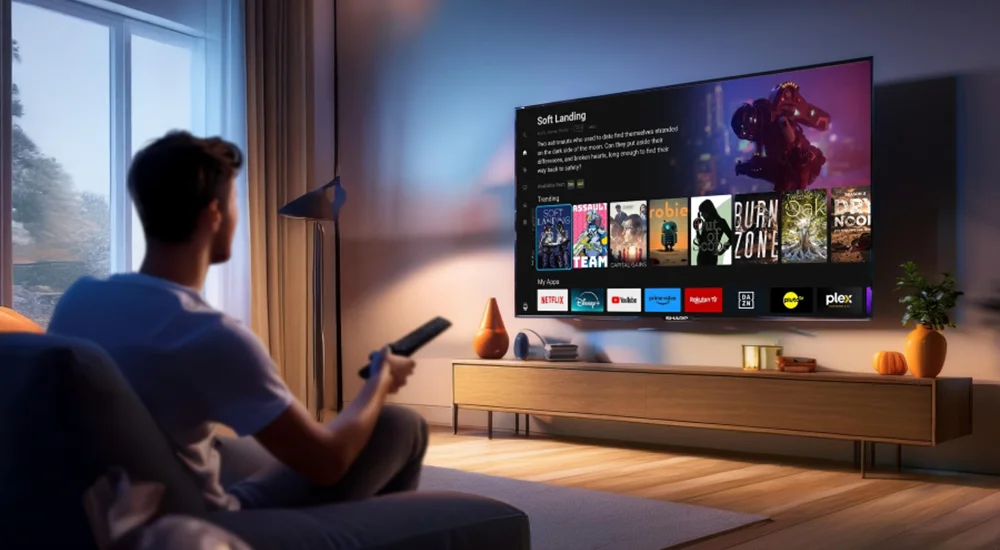
How Does IPTV Work? A Simple Explanation
Have you ever wondered
how you can watch live TV over the internet? It seems like magic, but it is actually smart technology. IPTV, or
Internet Protocol Television, sends TV shows and movies to your screen using the same internet connection you
use for email and browsing. It is different from the old way of using antennas or satellite dishes. In this
article, we will explain exactly how IPTV works in a way that is easy to understand. If you want to know more
about the best players, check out IPTV Smarters PRO.
Data travels from the server through the internet to
your device instantly.
The Basics:
Internet vs. Cables
Traditional TV works by
sending signals through the air (antenna), through a cable in the ground, or from a satellite in space. These
signals are broadcast to everyone at the same time. You cannot stop them or choose when they start.
IPTV is different. It
uses “IP” or Internet Protocol. This is the language computers use to talk to each other. When you watch IPTV,
you are not receiving a broadcast. You are asking for a specific video, and the internet sends it to you. It is
like ordering food from a menu instead of eating whatever is being served at a buffet.
Key Difference
Cable TV pushes all channels to you at once. IPTV sends
only the channel you ask for.
The Three Main
Steps
To get the video from
the source to your TV, three big things happen. Let’s break them down:
- 1. Preparation (Head-end): First, the TV programs (live sports,
movies, news) are captured. They are then converted into a digital format that can travel over the internet.
This is called “encoding”. - 2. Storage and Delivery: For movies (VOD), the files are stored on
big computers called servers. For live TV, the stream is sent immediately through a network of servers. - 3. Reception (Your Device): Your TV, phone, or box receives the
data. It decodes it back into a picture and sound that you can watch.
Devices like MAG boxes help decode the internet
signals into video for your TV.
Unicasting vs.
Multicasting
These are two technical
words, but they are easy to understand.
Unicasting is used for Video on Demand (VOD). When you watch a movie on Netflix, it is sent
only to you. If your neighbor watches the same movie, they get their own separate stream. It is a one-to-one
connection.
Multicasting is used for Live TV. The provider sends one stream for a channel (like a football
game). Everyone who wants to watch that channel connects to that same stream. It saves internet bandwidth. It is
a one-to-many connection.
The Role of the
Internet
Since IPTV relies on
the internet, your connection speed is very important. If your internet is slow, the video might stop to load.
This is called “buffering”.
To watch smooth TV, you
need a stable connection. Fiber optic internet is usually the best choice because it is fast and reliable. Wi-Fi
can work, but a wired cable (Ethernet) is always better for IPTV.
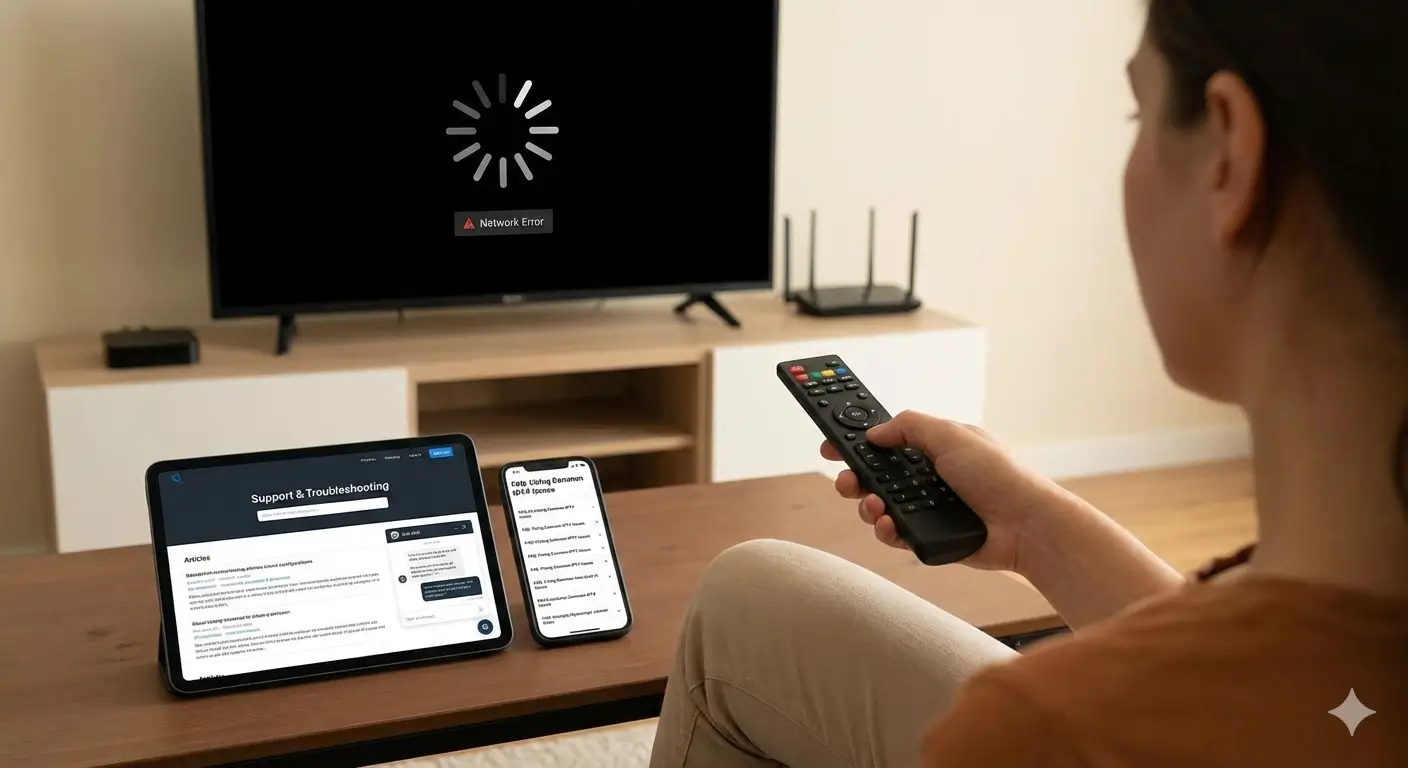
A strong internet connection prevents buffering and
keeps the picture clear.
What Happens When
You Change Channels?
When you press the
button to change the channel on your remote, here is what happens in the background:
- Request: Your device sends a message to the server saying “I want to
watch Channel B now”. - Stop: The server stops sending data for Channel A.
- Start: The server starts sending data for Channel B.
- Buffer: Your device collects a few seconds of video to make sure it
plays smoothly. - Play: The new channel appears on your screen.
All of this happens in
less than a second if you have good internet!
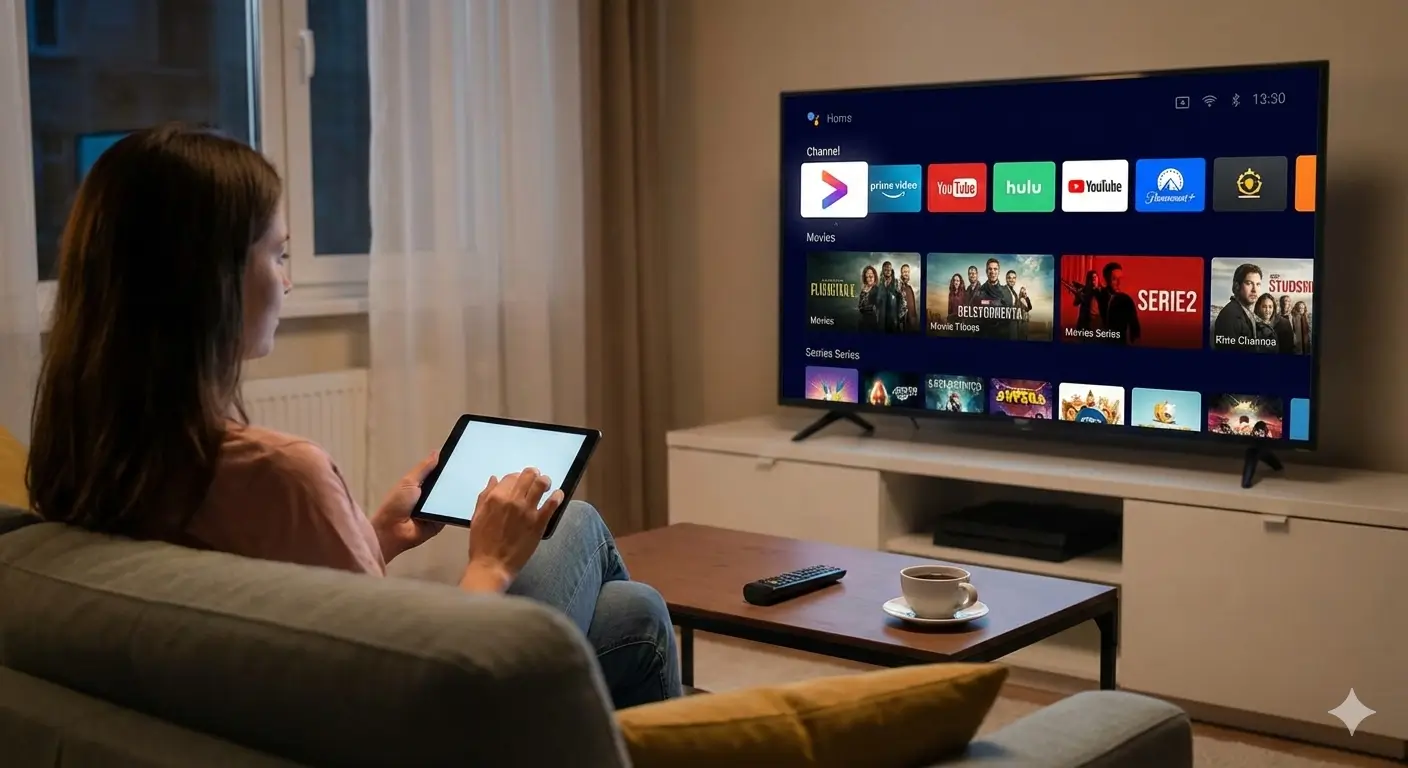
Modern IPTV systems are fast and responsive, making
channel surfing easy.
Architecture of
IPTV
To make sure everyone
gets good service, IPTV providers use a network architecture. This often includes:
- Central Unit: Where all the content comes from.
- Regional Servers: Servers placed closer to users in different
cities. This makes the video travel a shorter distance, so it is faster. - User Device: The box or TV in your home.
This setup helps
prevent freezing and ensures high quality, even when many people are watching at the same time. For more on how
to get the best setup, visit Smarters Pro.
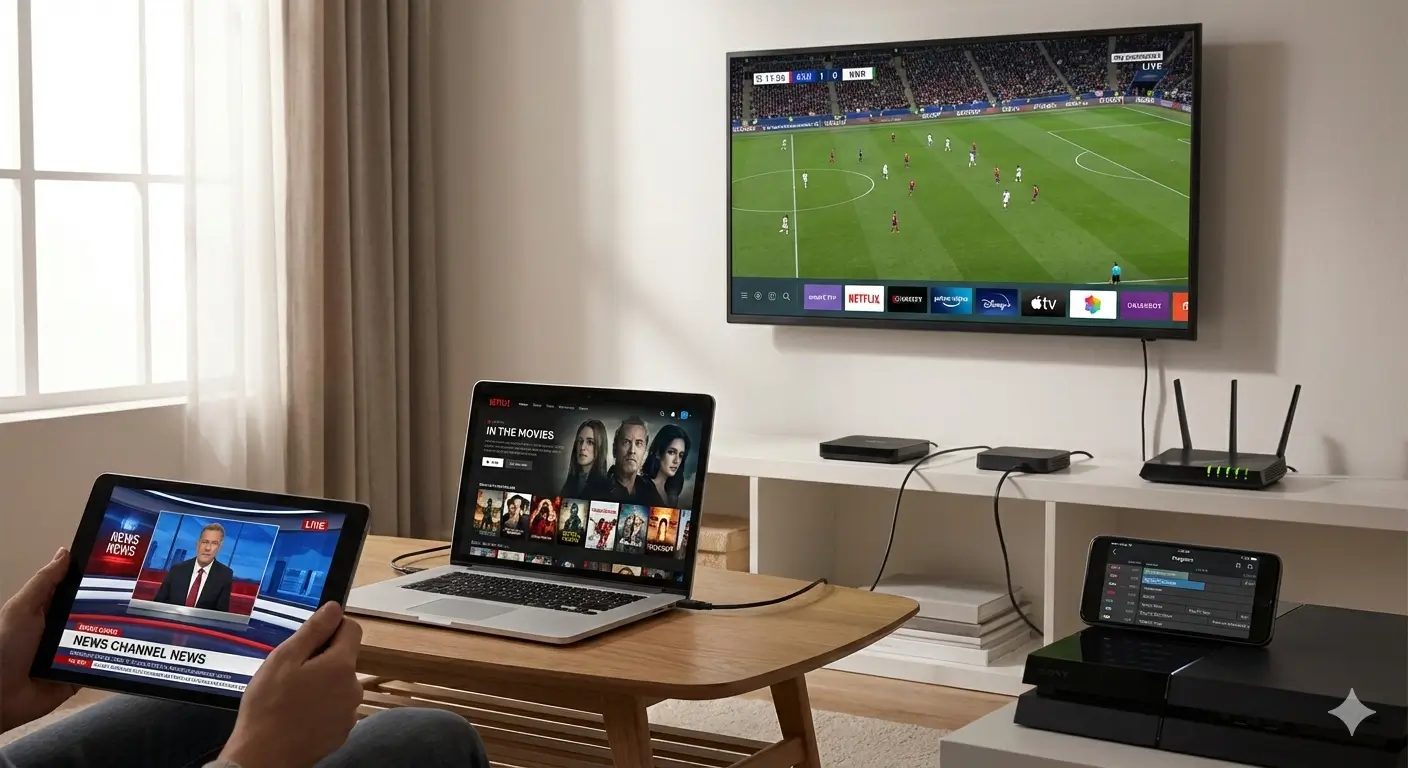
The network architecture allows multiple devices to
stream content simultaneously.
Summary
IPTV works by breaking
video into small data packets and sending them over the internet to your device. It is a smart, efficient, and
modern way to watch TV. It gives you more control and often better quality than old cable systems. As internet
speeds get faster, IPTV will only get better.
Did You Know?
You are probably already using IPTV technology without
knowing it! YouTube, Netflix, and Zoom calls all use similar principles of sending video over IP.