
Ethernet vs. Wi-Fi for IPTV: Which is Better?
It is the classic
debate: convenience vs. performance. Wi-Fi is easy. You don’t need wires. But Ethernet is fast and reliable.
When it comes to IPTV, buffering is the enemy. So, is it worth running a cable across your house to get a better
picture? In this article, we will compare Ethernet and Wi-Fi head-to-head to see which one is the true king of
streaming. For the best results on either connection, use a high-quality player like IPTV
Smarters PRO.
Two contenders enter, but only one guarantees zero
lag.
Round 1: Speed
Ethernet: It delivers the full speed of your internet plan. If you pay for 100 Mbps, you get
100 Mbps. It is a direct highway for data.
Wi-Fi:
It loses speed over distance. Even if you are close to the router, you might only get 70-80% of your speed. If
you are in another room, it could drop to 50%.
Winner: Ethernet.
Fact
Ethernet cables (Cat6) can handle speeds up to 10,000 Mbps.
They are future-proof.
Round 2: Stability
(The Buffering Killer)
This is more important
than raw speed. IPTV needs a constant stream of data.
Wi-Fi:
It is prone to interference. If your microwave turns on, or your neighbor downloads a file, your signal can dip
for a second. That second causes your TV to freeze.
Ethernet: It is shielded. Nothing interferes with it. It provides a rock-solid connection that
never fluctuates.
Winner: Ethernet (by a knockout).
Stability is key for live TV. Ethernet provides a
flat, consistent line.
Round 3:
Convenience
Ethernet: You need a cable. If your router is far away, you have to drill holes in walls or run
a long ugly wire along the floor.
Wi-Fi:
Invisible and instant. You can move your TV to any room without worrying about ports.
Winner: Wi-Fi.
Wi-Fi wins on aesthetics. No one likes messy cables.
The Middle Ground:
Powerline Adapters
If you want the
stability of Ethernet but the convenience of Wi-Fi, try a Powerline Adapter. It uses your
home’s electrical wiring to send the internet signal. You plug one unit near your router and one near your TV.
It acts like a wired connection without the long cables.
Powerline adapters are a great secret weapon for
IPTV.
Conclusion
So, is Ethernet better?
Yes, absolutely. If you can use a cable, use a cable. It is the single best thing you can do to
stop buffering. But if you can’t, don’t worry. Modern 5GHz Wi-Fi is good enough for most people. Just try to
keep your router close to your TV. For more tips on improving your connection, visit Smarters Pro.
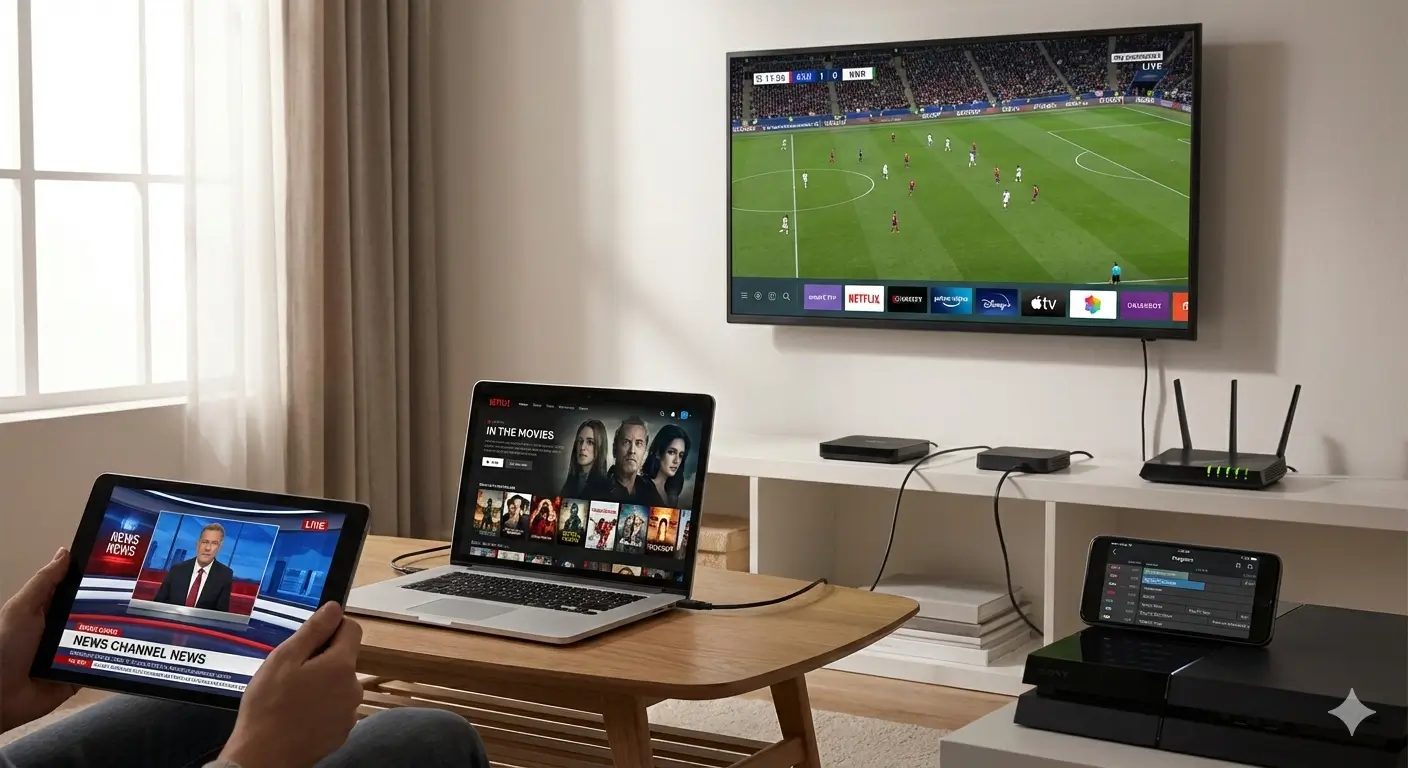
For the serious streamer, wired is the only way to
go.